.png)
<imgwrap>
<author>
Sasha Bossuot
Partnerships Manager at Lightning Reach
</author>
</imgwrap>
In collaboration with StepChange Debt Charity
<imgwrap>
</imgwrap>
I recently hosted a webinar with StepChange Debt Charity exploring how crisis support can act as a pathway into debt and money advice. By bringing together insights from both our data, we looked at how people arrive at crisis support, the barriers they face when seeking help, and how organisations can connect individuals with longer term support.
What became clear throughout the discussion is that crisis rarely exists in isolation. Financial hardship, debt, mental health and barriers to accessing support are closely connected. Crisis support also presents an important opportunity. When someone reaches out for help, it can be the moment where longer term resilience begins.
The discussion comes at an important moment for councils delivering financial support, as the upcoming Crisis and Resilience Fund sets to replace the Household Support Fund.
Here are three key takeaways from the session.
- The cost of living is the biggest driver of debt
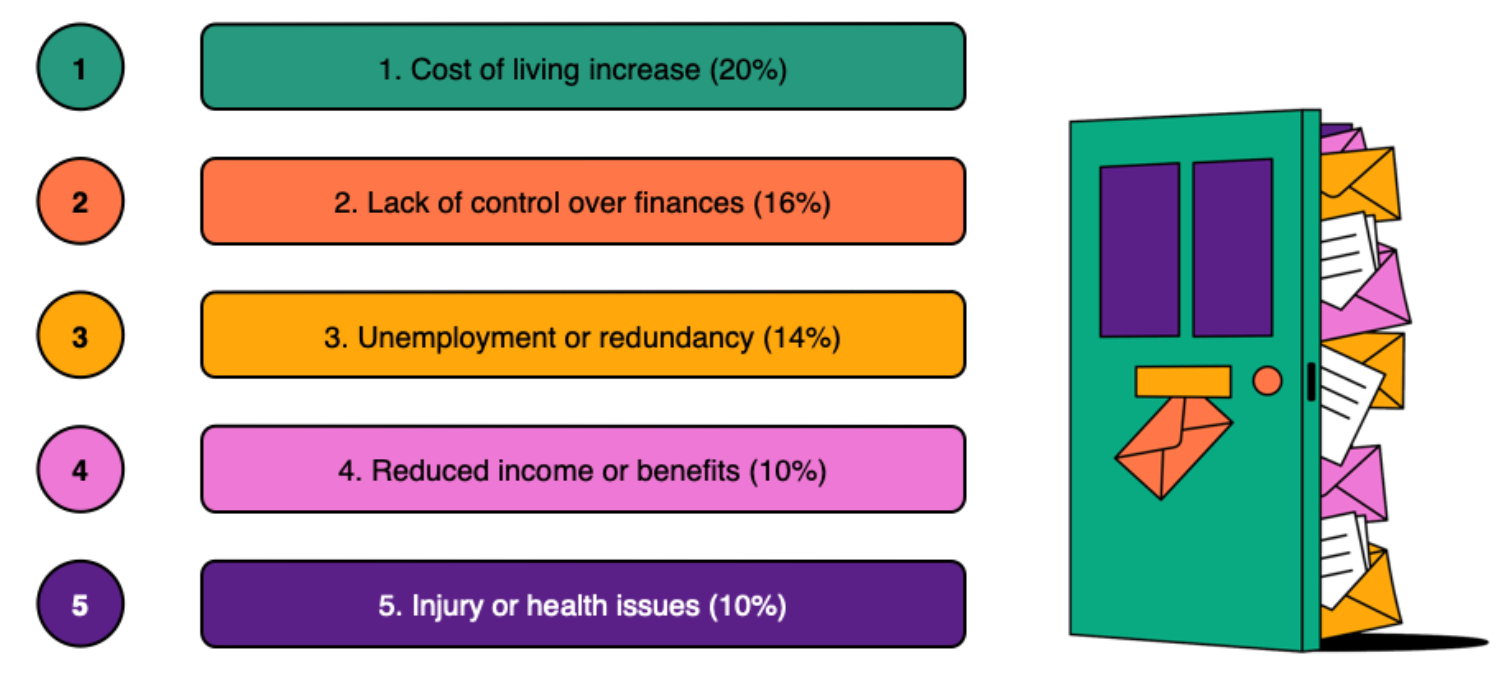
StepChange’s data shows that cost of living pressures have been the most cited reason people fall into problem debt for several years. At Lightning Reach we are seeing the same trend across our platform.
More than 70% of Lightning Reach users who report being in debt say they are struggling with energy costs and over half have council tax arrears. In many cases people are not simply dealing with non priority debts. They are struggling to cover essential household costs.
In terms of the drivers of debt, Daniella Oliver-Gavin, Business Development Manager at StepChange Debt Charity commented that “Cost of living remains high in reasons for problem debt, with just over one in five new StepChange clients citing this as the main reason for their debt in our latest annual report.”
There is an increasing variety of pressures that could further affect household finances. The emerging conflict in the Middle East has raised concerns about disruption to global supply chains, particularly around energy and shipping routes. Any disruption could feed into higher costs further down the line, creating additional pressure for households already struggling to keep up.
- Debt, crisis and mental health are intrinsically linked
Another key theme from the webinar was the relationship between financial hardship and mental health.
Financial stress can increase the risk of anxiety and depression, while mental health challenges can make it harder for people to manage their finances or seek help.
StepChange data shows that vulnerability is common among people seeking debt advice, with mental health issues being one of the most frequently reported additional challenges.
Daniella highlighted the importance of recognising how these issues interact. As she explained, “Mental health issues are significant in this space because of the repercussions when people miss these payments. The added stress of falling behind can have a real impact on people’s mental health.”
This reinforces the need for support services to take a holistic approach. Addressing debt in isolation rarely leads to lasting outcomes if the wider circumstances affecting someone’s wellbeing are not also considered. Approaches like Lightning Reach where joined up referrals can be made into multiple services, ensures a 360 degree view of an individual’sneeds can be acted upon.
- The barriers to support are consistent across sectors
The webinar also highlighted that the barriers people face when accessing support are remarkably consistent across organisations.
These often include not knowing where to start, feeling ashamed about asking for help, or worrying about contacting organisations they owe money to.
Daniella spoke about how these concerns can prevent people from engaging with support services early on. As she noted, “Helping people break out of the cyclical nature of debts rising and avoidance growing plays into our key pillar of breaking down the stigma of debt in the first place.”
This means the first organisation someone approaches plays a crucial role. Simply signposting someone to another service may not always be enough. Partnerships between organisations and warm referrals can make it much easier for people to access the wider support they need.
Councils turning crisis support into long term resilience
Crisis funds and emergency support schemes are designed to provide immediate help. They can also serve as a gateway to longer term financial stability.
Daniella emphasised that debt advice plays an important role in helping people move beyond immediate crisis. As she explained, “initial interventions are critical, but we also really want to focus on providing longer term resilience that lessen future need to return to crisis support”
With the introduction of the Government’s new Crisis and Resilience Fund, there is a growing opportunity for organisations to focus not only on responding to immediate hardship but also on connecting people with the wider support that helps prevent repeat crises.
By making support easier to access and strengthening partnerships across sectors, crisis support can become more than a safety net. It can become the first step toward lasting financial resilience.
Find out more
Interested in exploring how Lightning Reach can help you deliver your support schemes, or the Crisis and Resilience Fund? Get in touch at partnerships@lightningreach.org
Watch the full webinar on our website: https://www.lightningreach.org/updates