%20(2).png)
Local Government Reorganisation has been paused. What should councils do now?
The Government’s decision to pause Local Government Reorganisation (LGR) across England, with the exception of Surrey, has created significant uncertainty for councils. But while some of the big structural questions are back up in the air, much of the practical work already underway remains just as important.
Councils had been moving quickly from planning into delivery. New structures were taking shape, teams were beginning to coordinate across proposed geographies and recruitment was underway for key LGR roles. Now, some of those plans are in limbo.
There are significant questions still to answer, including what happens to proposed new authorities and what next year's elections will look like. But for councils already preparing for change, perhaps the most important question is simpler: what should we keep doing now?
A pause, not necessarily a stop
LGR remains a central part of the Government's plans for English devolution. Legal challenges have progressed in a number of areas and the Government has referred to new legal advice as part of the reason for the latest review. While that may explain why some decisions are being reconsidered, it doesn't answer every question about the wider pause.
Surrey continues on its existing timetable, while elsewhere councils now face a period of uncertainty. That doesn't mean everything should stop.
Focus on the work that makes sense whatever happens
Councils should distinguish between activity that depends on a particular LGR outcome and the work that improves services whatever the eventual boundaries or timetable. There is plenty in the second category.
Aligning Council Tax and Council Tax Reduction approaches, mapping resident pathways, improving data sharing, strengthening programme management and understanding where teams, systems and processes overlap will all be important under almost any future structure.
The same is true of partnership working. Housing and homelessness prevention, Revenues and Benefits, social care, public health and financial support don't operate in isolation. Residents move between these services and between councils, charities, housing providers, utilities and other organisations.
Whatever happens to council boundaries, making those journeys simpler is worthwhile.
Protect capacity and protect the resident experience
LGR was already asking stretched teams to deliver significant organisational change alongside business as usual. The pause doesn't remove that pressure.
Reducing avoidable administration should therefore remain a priority. Councils can simplify repetitive processes, reduce duplication and make it easier for residents to access support without repeatedly providing the same information.
The objective should be straightforward: Residents should not feel the impact of the change, or the change to the change.
Statutory and frontline services still need to work on day one of any future authority. The work to connect those services and the wider support ecosystem around them can continue now.
CRF is a good example
The transition to the Crisis and Resilience Fund makes this particularly relevant.
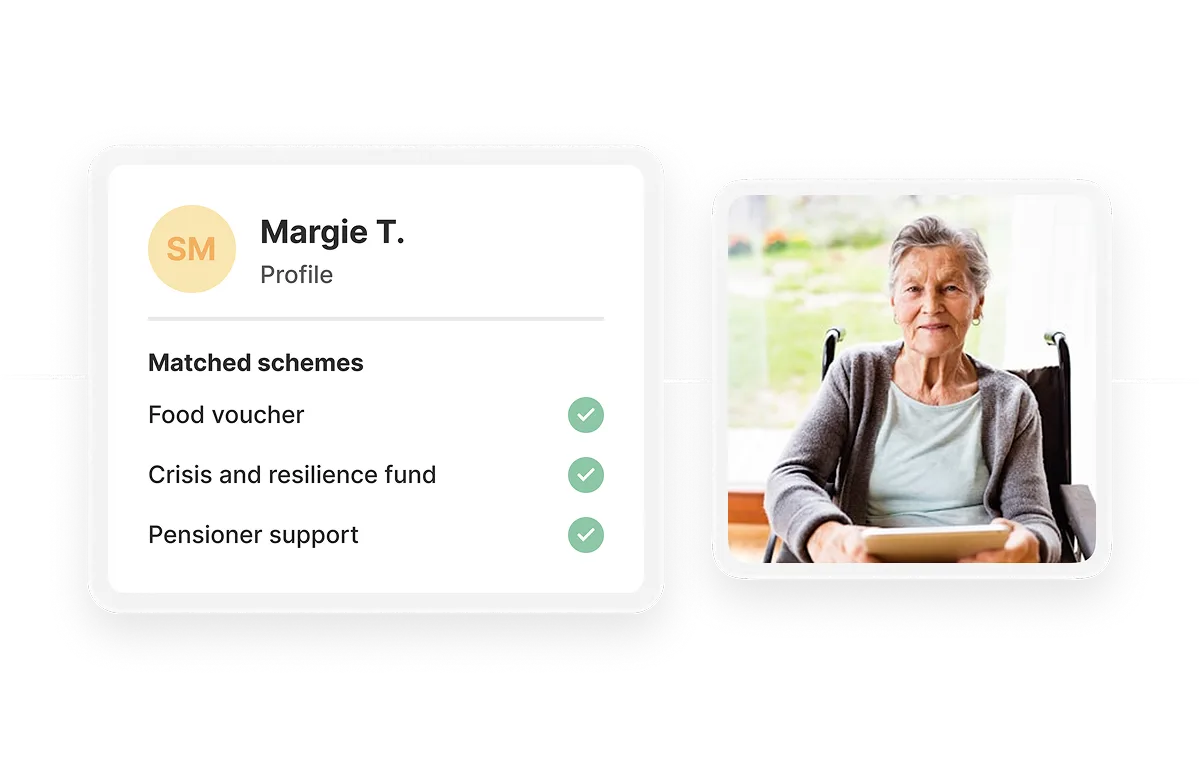
Councils need support pathways that work today but can also operate across future structures. That means thinking beyond individual schemes to how residents find support, how eligibility is assessed, how referrals move between organisations and how outcomes are measured.
In Gloucestershire, Lightning Reach is already supporting CRF delivery with this wider environment in mind.
Our approach is to work alongside existing council systems, helping teams reach residents earlier, reduce administration and understand the impact of the support they provide. That's consistent with Lightning Reach's council positioning around practical infrastructure, prevention and measurable outcomes.
Keep moving on what you can control
Councils need clarity on structures, elections and timescales, and they need it quickly. But uncertainty at the structural level doesn't have to mean inactivity at the operational level. Better resident journeys, stronger partnerships, less duplication, better data and simpler access to support are valuable regardless of where LGR ultimately lands.
Structures may change. Boundaries may change. Timetables may change. The need to deliver good outcomes for residents doesn't.
Lightning Reach works with councils to simplify how financial support is delivered, including CRF delivery, Council Tax arrears, homelessness prevention and resident support pathways.
If you're reviewing how your services need to work across future council structures, talk to our team about where better-connected support and technology could reduce administration and improve outcomes for residents.